

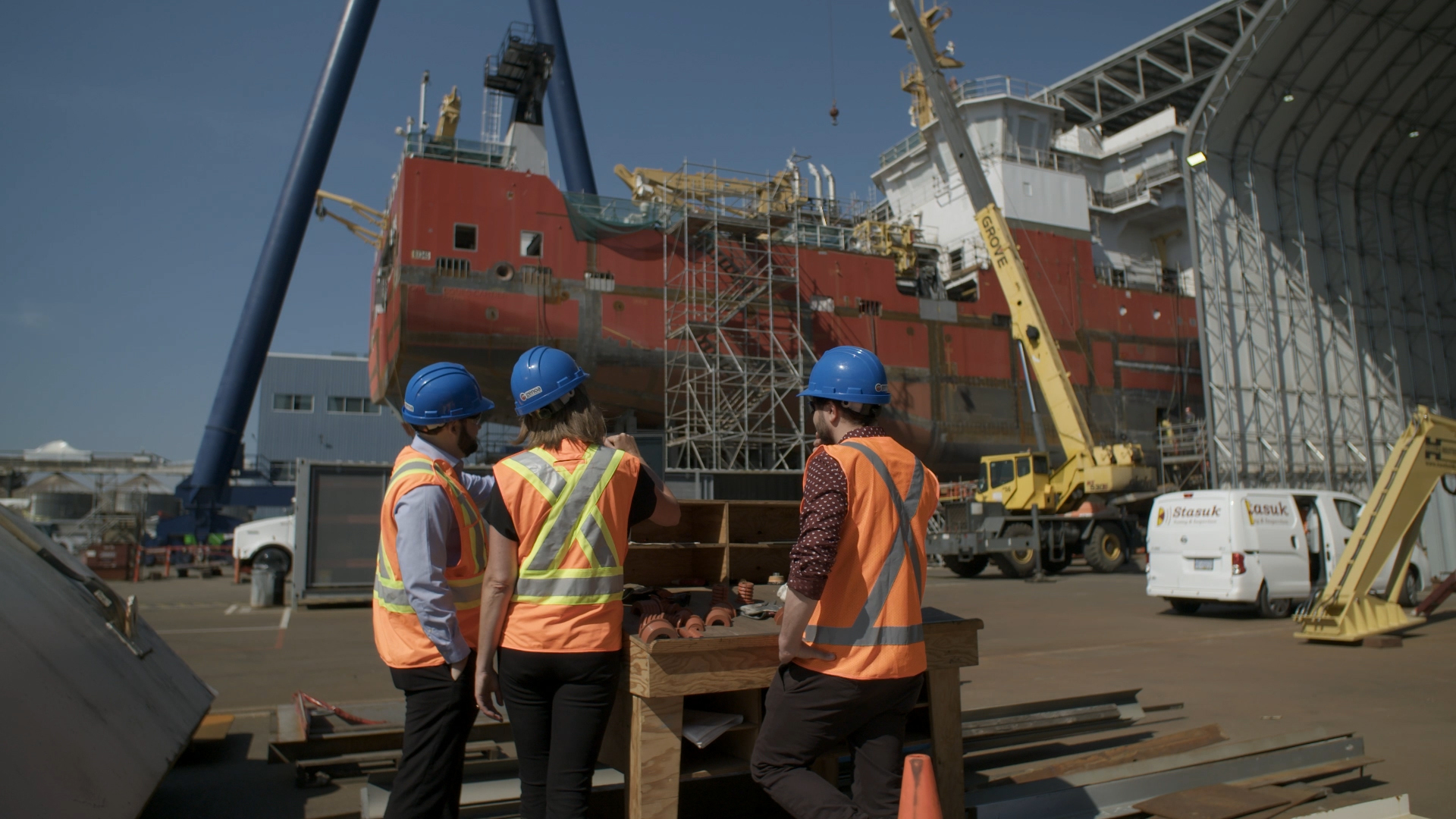
Genoa’s 3D modelling for ship refits transforms legacy drawings into production-ready digital models that reduce drydock delays and eliminate arising issues. When a ship enters drydock, every day is critical — and that’s when the value of the Digital Ship® pays dividends, solving problems virtually so work in the yard can stay on schedule.
Refit projects often uncover “arising issues” — unexpected problems discovered in the field that demand extra engineering, planning, and on-site rework. Traditionally, these issues drive costly delays and disrupt critical-path work.
This refit project, brought forward by our client and project partner, introduces a new approach that Genoa Design is proud to support. By applying production-level 3D modelling to the refit process, the project aims to identify and resolve potential clashes and design gaps before production begins, thereby reducing costs, risks, and downtime.
This proactive strategy is designed to keep aging ships operational while new vessels are in development, supporting mission readiness and smoother workflows.
3D Modelling for Ship Refits: A Smarter Drydocking Strategy
For this vessel refit, the goal was clear: reduce arising issues and prevent critical-path delays during a tight drydocking window.
Working from 30-year-old legacy 2D drawings, Genoa’s Design and Consulting team is developing a production-level 3D model focused on the vessel’s piping and HVAC systems — including cooling water, fuel oil, and hydraulics.
Within this digital environment, the project aims to:
- Reconstruct and validate system geometry for accuracy and constructability
- Built a complete parts catalogue with traceable metadata
- Resolve clashes and clearance issues virtually, before work begins
- Generate spool and arrangement drawings to guide efficient pre-fabrication and installation
This model-first approach, initiated in collaboration with our client and partner, represents a proactive, data-driven process designed to make refits more predictable, coordinated, and efficient.
Virtual Problem-Solving, Real-World Potential
Imagine this: during a routine inspection, the shipyard discovers a corroded pipe connecting a key piece of machinery. Traditionally, that single issue would trigger a chain reaction—on-site measurement, redesign, fabrication, and reinstallation—stretching the refit timeline by days or even weeks. In this scenario, using our “Build it First” strategy could avoid that delay.
By creating a production-ready model that anticipates potential replacements and generates detailed spool drawings in advance, the refit team will have prefabricated components staged and ready for immediate installation, reducing downtime and keeping critical-path work on schedule.
The Impact
By integrating intelligent 3D modelling and pre-fabrication early in the process, the project is expected to have measurable improvements in schedule, coordination, and cost control.
- Fewer arising issues: Challenges addressed virtually
- Reduced critical-path delays: Replacement parts prepared in advance
- Greater efficiency: Yard teams are able to focus more time on installation, and reduce on-site fabrication
- Enhanced coordination: Engineering and production share a single verified model
Every day saved in drydock can reduce labour costs, dock fees, and turnaround time.
This proactive, model-first strategy is designed to keep vessels operational longer, safer, and smarter — bridging the gap until new ships are delivered.
Why It Matters
Genoa aims to deliver predictability, precision, and performance — where it matters most. By transforming legacy data into intelligent, production-ready models, we are working alongside our partners and clients to help shipbuilders refit smarter, build faster, and operate longer.
Every design we contribute supports readiness, reduces risk, and helps redefine what is possible in modern shipbuilding.
Ready to minimize downtime and maximize efficiency in your next drydocking? Let’s talk about how Genoa can support your refit strategy.